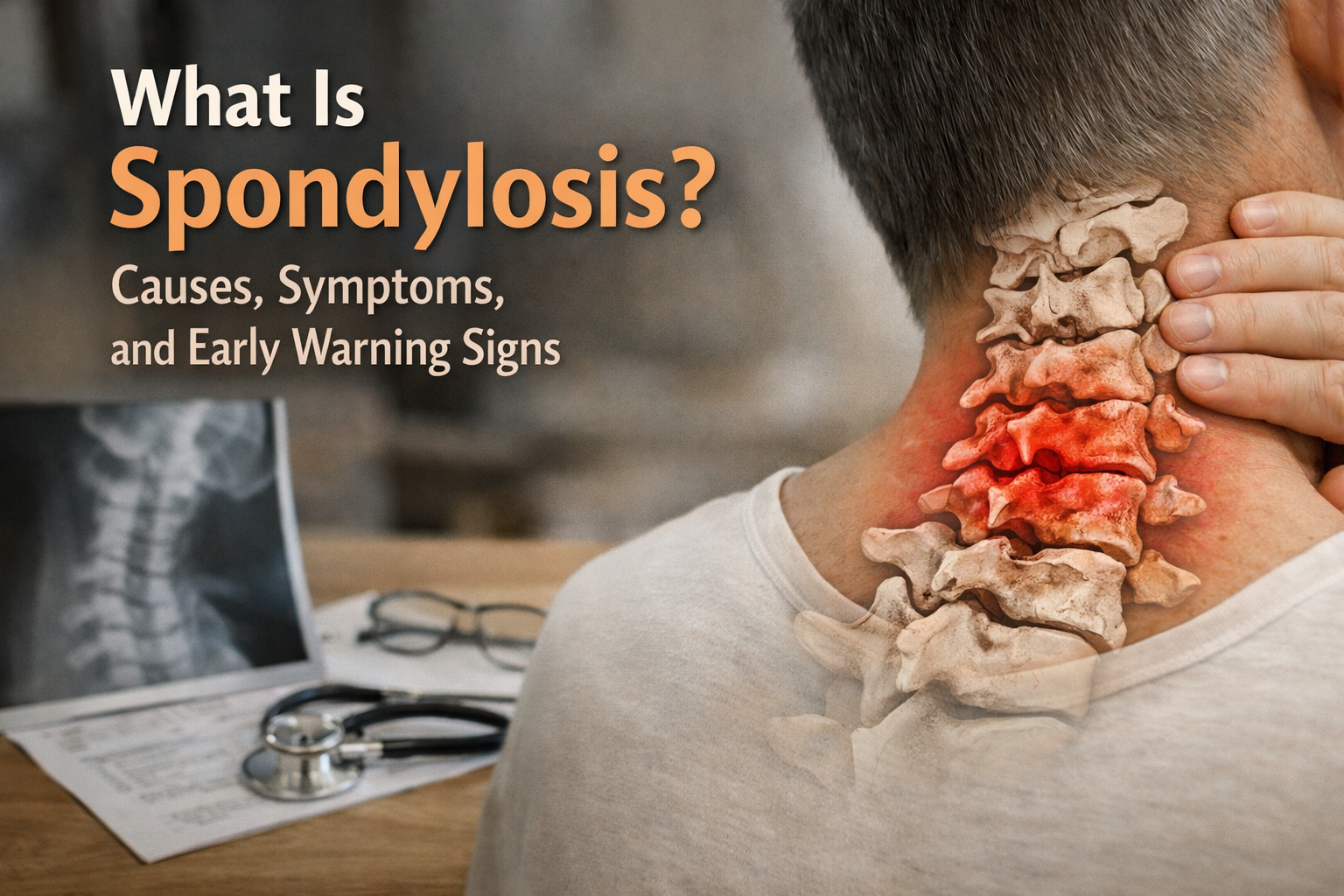
Understanding Spondylosis
Spondylosis is a degenerative spine condition caused by age-related wear and tear of the vertebrae and discs. It commonly affects the neck and lower back, leading to stiffness and discomfort. Over time, spinal structures weaken, reducing flexibility and mobility. This condition is often linked with degenerative disc disease and gradually progresses if not managed early.
Common Causes of Spondylosis
The primary cause of spondylosis is natural aging, but several factors accelerate spinal degeneration. Poor posture, prolonged sitting, repetitive strain, and obesity contribute to spinal stress. A sedentary lifestyle increases the risk of spinal osteoarthritis, while previous injuries may worsen degeneration. Genetic predisposition and inadequate physical activity also play significant roles.
Key Symptoms to Watch For
Symptoms vary based on severity and affected spinal region. Many individuals experience persistent neck or back pain, stiffness, and reduced range of motion. Some may develop cervical spondylosis, leading to headaches and shoulder discomfort. In advanced cases, nerve compression causes tingling, numbness, or weakness in arms or legs.
Early Warning Signs You Should Not Ignore
Early detection can prevent complications. Warning signs include morning stiffness, pain after inactivity, and discomfort during movement. If untreated, spondylosis may progress to lumbar spondylosis, affecting daily activities. Difficulty maintaining posture and sudden sharp pain episodes signal the need for medical evaluation.
How Spondylosis Is Diagnosed
Diagnosis involves physical examination, medical history review, and imaging tests. X-rays, MRI, or CT scans help assess bone spurs and disc damage. Identifying nerve compression early allows targeted treatment to avoid surgery.
Treatment and Management Options
Treatment focuses on pain relief and mobility improvement. Options include physiotherapy, posture correction, medications, and lifestyle changes. In severe cases, spinal degeneration may require advanced interventions. Timely consultation helps determine the best course of action.
Conclusion
Spondylosis is a common spinal condition that progresses gradually but can significantly affect quality of life if ignored. Early awareness and proactive care help manage symptoms effectively and prevent complications.
Consult our Dr. Ambadas Spine Surgeon for accurate diagnosis and personalized treatment to maintain long-term spinal health.